Lead & request flows
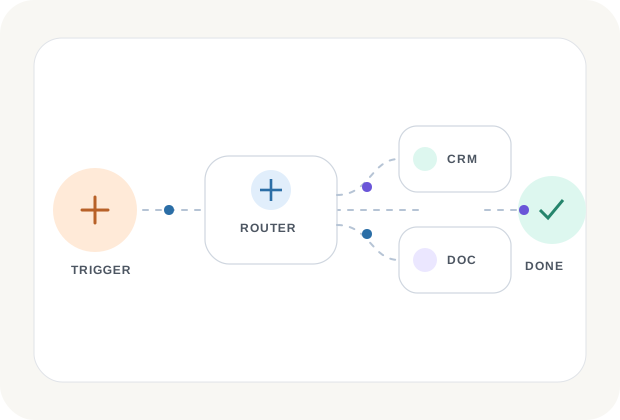
Route form submissions, requests or enquiries into CRM, inboxes and task systems.
Workflow Automation
We connect the tools your organisation already uses so information moves reliably between systems without repetitive manual work.
Where automation helps
Many operational delays come from copying information between forms, inboxes, spreadsheets, CRM, documents and reporting systems.
We map these hand-offs and automate the repeatable steps while keeping exceptions visible and controllable.
Typical workflows
Route form submissions, requests or enquiries into CRM, inboxes and task systems.
Create, name, classify, distribute or archive documents using consistent business rules.
Trigger reminders, alerts and status updates when defined conditions are met.
Collect structured data and feed recurring management or operational reports.
Method
The objective is not to automate every step. It is to remove avoidable friction while keeping the process understandable and recoverable.
Identify triggers, data, hand-offs, exceptions and the actual systems used by the team.
Remove redundant steps before automating them.
Link the necessary systems with explicit rules, logs and failure handling.
Verify that the automation remains reliable as processes and tools evolve.
Automation or agent?
We do not add AI to a process simply because it is available. Deterministic automation is preferable when the logic is stable; AI is introduced only where interpretation genuinely improves the workflow.
We can map the workflow and identify the smallest automation that produces a meaningful operational gain.
Discuss a workflow